
Recording and sharing content with spatial audio is made possible by the Sony Spatial Audio Video Tool, which is recommended for use with microphones that carry Eclipsa Audio certification. A review of this microphone notes that the certification signifies the ECM-AX10 model meets the requirements for spatial audio encoding based on IAMF standards—making it the first Sony microphone to receive such a distinction. While this may not be of great practical significance to the average user, it does demonstrate that Sony places a high priority on the compatibility of the audio captured with this new microphone.
In 2023, the Alliance for Open Media (AOM) — a global consortium that includes Samsung, Google, Netflix, Meta and other leading companies — officially adopted Immersive Audio Model and Formats (IAMF) as the industry standard for 3D audio. Developed by Samsung and Google, this innovative 3D audio format is currently available to content creators under the brand name Eclipsa Audio.

Eclipsa Audio’s open-source framework sets it apart from other 3D audio technologies by allowing anyone to create 3D audio content without paying royalties. Following its debut at CES 2025, the technology has been met with enthusiasm from content creators and has gained momentum across media platforms and online communities.
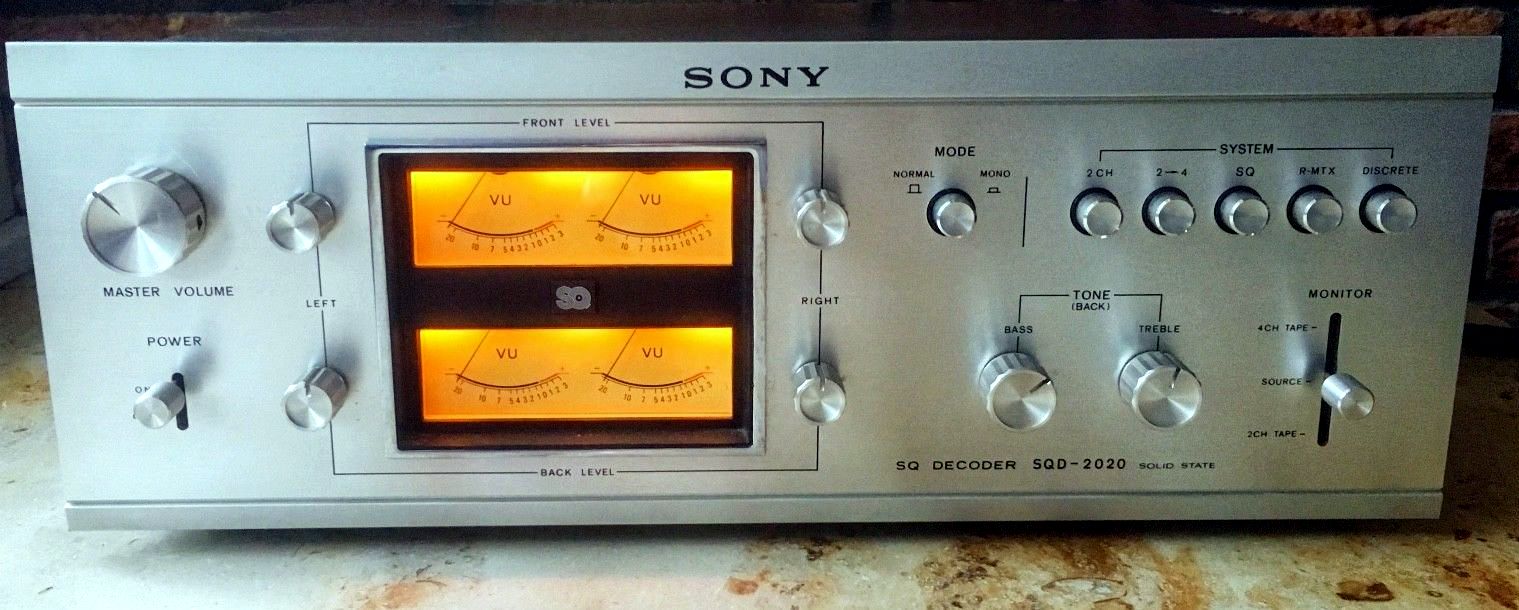 Half a century ago, Sony already offered a comprehensive range of home audio equipment for the advanced playback of analog quadraphonic recordings in the SQ format. Initially, channel separation in this system was 3 dB; with the addition of "front-rear logic" circuitry, it increased to 12 dB, and later, with "full logic" circuitry, reached as high as 20 dB.
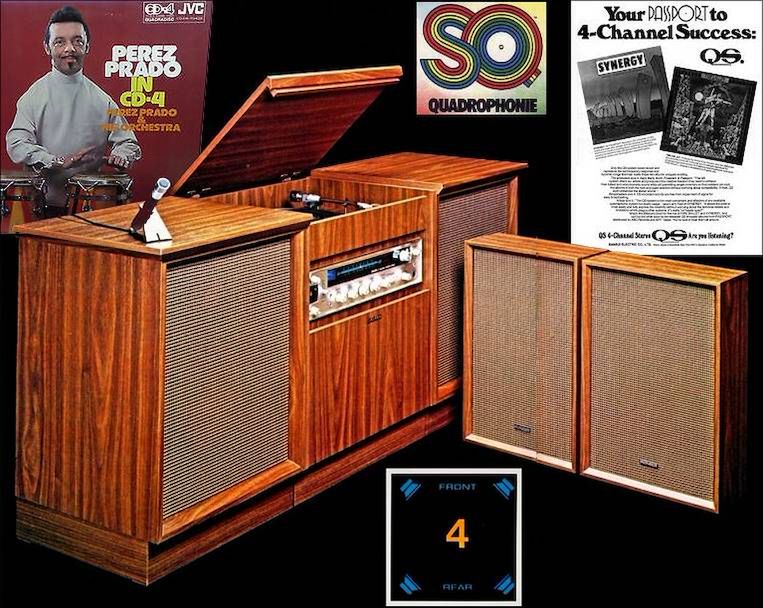
In the 1970s, attempts were made to popularize quadraphonic recording systems for microgroove discs—specifically the discrete CD-4 system and the matrix-based SQ and QS systems. These recordings were released on LPs (long-playing records), now commonly referred to simply as "vinyl."
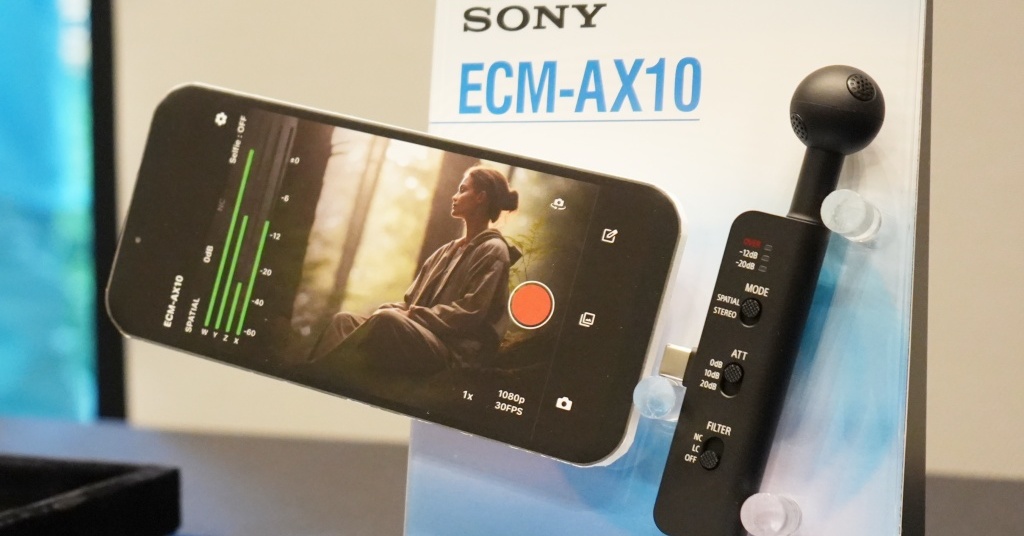
The amplifier design in the ECM-AX10, in conjunction with software, enables the application of the RIAA equalization—essential for vinyl playback—with a lower level of distortion than traditional hardware-based solutions. The same applies to the decoding of analog quadraphonic recordings from vinyl.
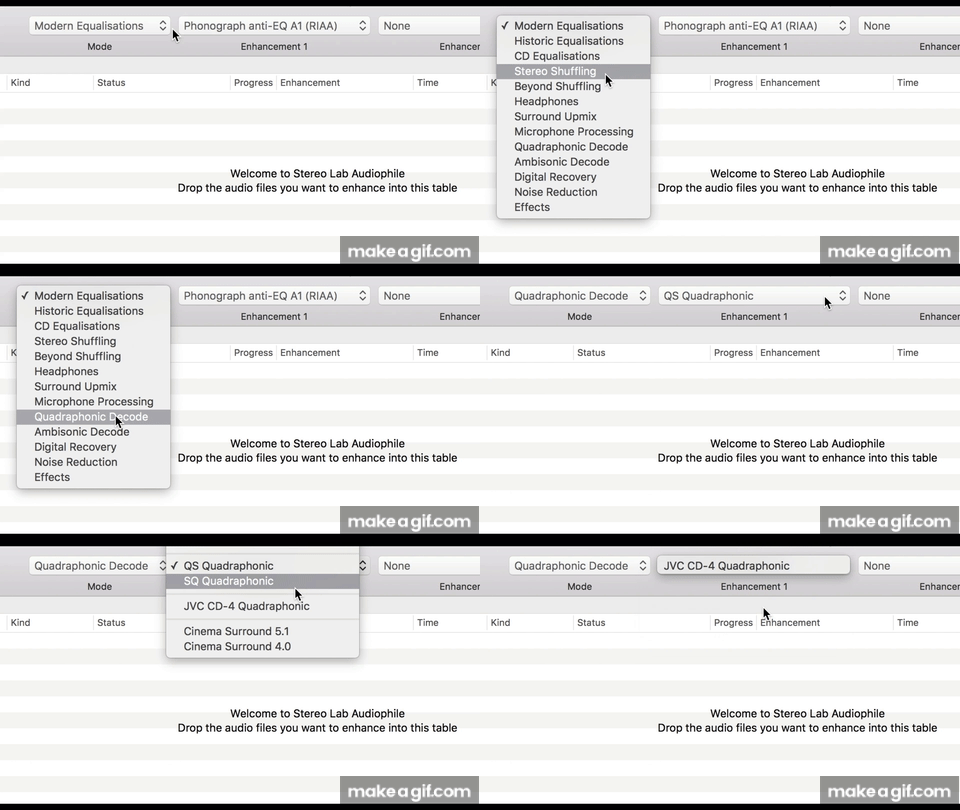
Software that allows for the playback of analog quadraphonic recordings is already on the market, but a fresh perspective on the subject is needed to ensure that the music from these recordings sounds as it should in a home environment.

As early as 1975, the Danish manufacturer B&O equipped a turntable Beogram 6000 with an RIAA-equalized preamplifier and a CD-4 decoder, while an SQ decoder was housed in Beomaster 6000, the unit responsible for driving the loudspeakers. The preamplifier should still be kept as close to the turntable as possible. If it has a processor, it can digitally process a quadraphonic format for Eclipsy Audio. Power amplifiers should be positioned as close as possible to the electroacoustic transducers, where the Eclipsa Audio signal can be individually tailored to the specific listening conditions.
Comments
Post a Comment