80 years of experience at JBL can be with NQ8 procesor a significant support for the development of Elipsa Audio

The legendary American brand JBL currently exists within Harman Kardon as a division of Samsung and could provide significant support for Elipsa Audio. Sidney Harman acquired JBL back in 1969. On November 14, 2016, the following news was released: Samsung Electronics and Harman International Industries, Incorporated
today announced that they have entered into a definitive agreement under
which Samsung will acquire HARMAN for $112.00 per share in cash, or
total equity value of approximately $8.0 billion. Upon closing, the
transaction will immediately give Samsung a significant presence in the
large and rapidly growing market for connected technologies,
particularly automotive electronics, which has been a strategic priority
for Samsung, and is expected to grow to more than $100 billion by 2025. The results of this collaboration are impressive.
 Now, a new challenge looms on the horizon. In early 2025, a new surround sound format was announced at Consumer Electronics Show, and media outlets reported that Google and Samsung were the main initiators. It is supported by a much larger group called the Alliance for Open Media. Reports from CES emphasized that it was a Dolby rival, but Jacoba Green wrote: Back
in 2023, Samsung and Google
announced that the two companies would collaborate on a project called Immersive Audio
Model and Formats (IAMF).
Samsung described IAMF as “a complete open-source framework for 3D audio, from
creation to delivery and playback.” Now, the technology is being put to work in
a new audio format called Eclipsa Audio, which is being integrated into Samsung’s
2025 TV and soundbar lineup. Samsung
Electronics America made the announcement at CES 2025, calling Eclipsa Audio “a
groundbreaking 3D audio technology” that would enable content creators to “craft
dynamic, immersive audio content which can seamlessly playback on Samsung
TVs and soundbars.” According to Samsung, the integration of Eclipsa Audio
into the company’s 2025 AV products “brings truly captivating 3D audio and
visual experiences closer to consumers than ever before.”
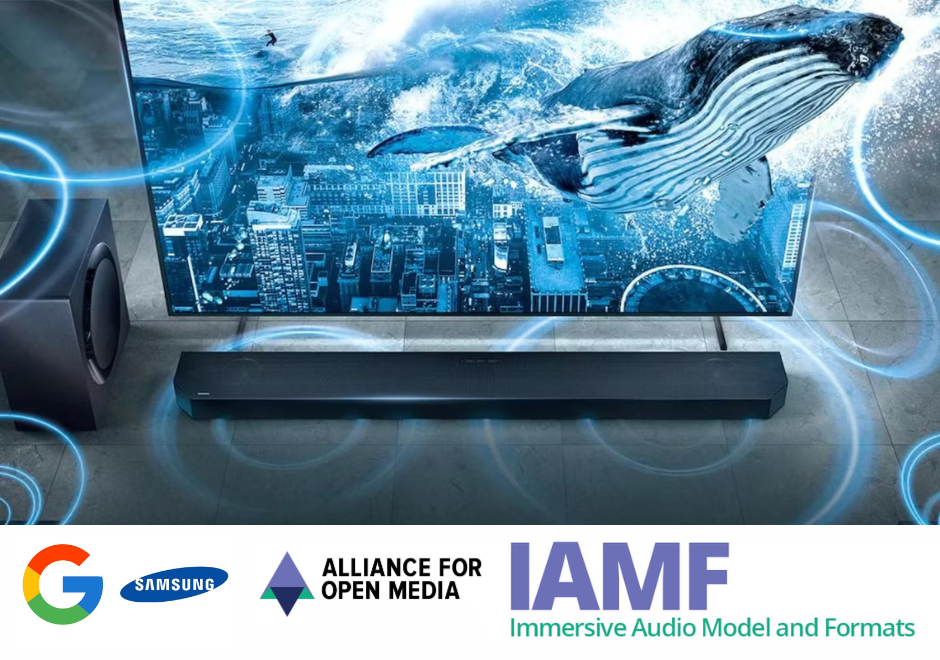
Now, a new challenge looms on the horizon. In early 2025, a new surround sound format was announced at Consumer Electronics Show, and media outlets reported that Google and Samsung were the main initiators. It is supported by a much larger group called the Alliance for Open Media. Reports from CES emphasized that it was a Dolby rival, but Jacoba Green wrote: Back
in 2023, Samsung and Google
announced that the two companies would collaborate on a project called Immersive Audio
Model and Formats (IAMF).
Samsung described IAMF as “a complete open-source framework for 3D audio, from
creation to delivery and playback.” Now, the technology is being put to work in
a new audio format called Eclipsa Audio, which is being integrated into Samsung’s
2025 TV and soundbar lineup. Samsung
Electronics America made the announcement at CES 2025, calling Eclipsa Audio “a
groundbreaking 3D audio technology” that would enable content creators to “craft
dynamic, immersive audio content which can seamlessly playback on Samsung
TVs and soundbars.” According to Samsung, the integration of Eclipsa Audio
into the company’s 2025 AV products “brings truly captivating 3D audio and
visual experiences closer to consumers than ever before.” 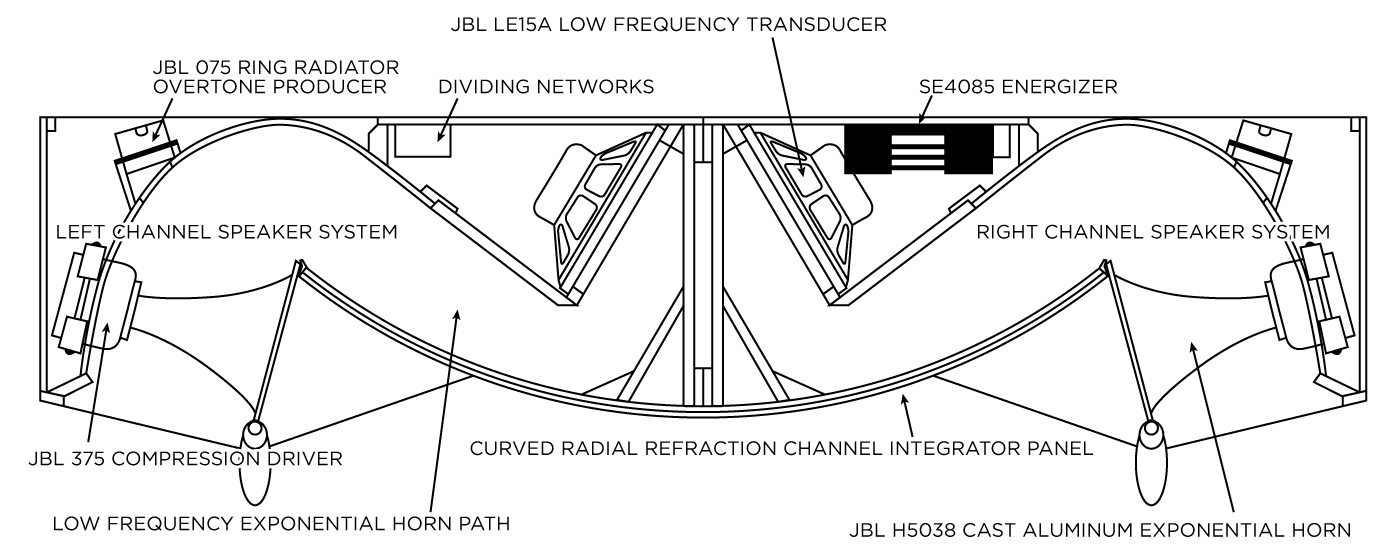

Back in 1957, JBL introduced a fantastic offering for home and cinema. It could be described as the first soundbar. It's commonly associated with playing music at home. However, in an era when films could only be viewed with good quality using a projector, it also allowed for the creation of a cinematic living room in an attractive location.
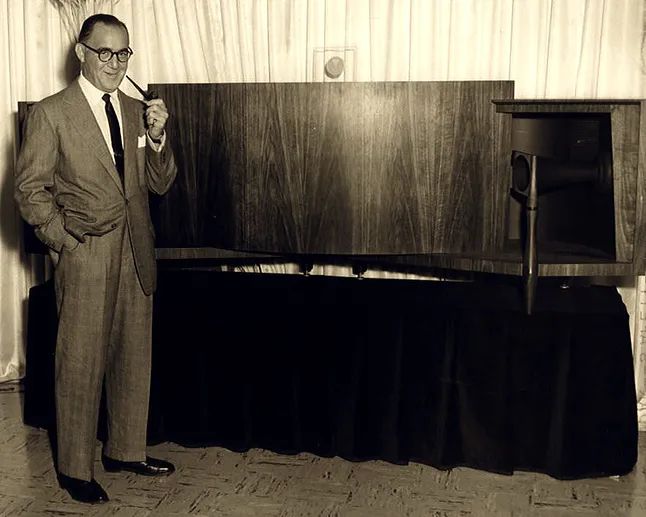
Benny Goodman attended the inauguration. Wikipedia says about this iconic speaker: The JBL D44000 Paragon is a one-piece stereo loudspeaker created by JBL that was introduced in 1957 and discontinued in 1983; its production run was the longest of any JBL speaker. At its launch, the Paragon was the most expensive domestic loudspeaker on the market.

The 80th anniversary saw the release of speakers that seem very standard. This is no surprise, as JBL introduced a similar solution in the 1960s that was later replicated around the world. First came the 4310 studio monitors, and many music lovers wanted to have them at home, but they didn't look elegant enough with the furniture. So they worked on the appearance and thanks to that the L100 appeared. They had unique solutions at that time with AlNiCo magnets and a cellulose bass daphragim, and titanium was used for the high frequencies. Production of these speakers has been revived many times, as there has always been a large audience willing to purchase them. New generations of music lovers have emerged, and the speaker design has only been revised to reflect the improved capabilities of newer components.

JBL now offers a soundbar L75ms that can be paired with the Paragon and L100. The possibilities of new technologies mean that this solution can be smaller and cheaper, while ensuring good quality music playback at home. The built-in amplifiers are largely responsible for this, but such a solution isn't innovative. Similar solutions are offered by many brands. However, it is designed to be complete and even has a turntable input to play vinyl records.
 Electronics allows for many more interesting solutions, and the most attractive ones will be for the new standard. Digital technology allows the use of transformations with smaller phase
distortions than in analogue, which applies to the standard RIAA correction on vinyl records and even the quadraphonic encoding recorded
on them CD-4, SQ, QS. The leader in electronics for the first two systems was Marantz, which has long been an inspiration for PC4uMusic configurations and is also part of Samsung's structure.
Electronics allows for many more interesting solutions, and the most attractive ones will be for the new standard. Digital technology allows the use of transformations with smaller phase
distortions than in analogue, which applies to the standard RIAA correction on vinyl records and even the quadraphonic encoding recorded
on them CD-4, SQ, QS. The leader in electronics for the first two systems was Marantz, which has long been an inspiration for PC4uMusic configurations and is also part of Samsung's structure.
Samsung's structure also includes a Danish brand that has introduced a solution: The heart of Bang & Olufsen’s Mozart platform is the replaceable module,
frontloaded with enough processing power to receive software updates
and features for many years to come. If the connectivity and streaming
technology ever becomes obsolete, the module can be replaced with the
latest version – providing great sound experiences for decades to come. This brand has also long been the inspiration for the PC4uMusic, and now there is even complete compatibility with their new concept
 The JBL L75ms already has a processor, but it could be replaced by the NQ8 that Samsung installs in its TVs. It also works well in an audio system. It all depends on the software. Could create a system with an L75ms in the front and a smaller L42ms in the back. They can be connected wirelessly, which is very practical with the rear speaker and will ensure optimal sound quality for its function. It will be a 3.0.2 system in which digital technology will allow for optimal music reproduction using electrostatic transducers in a specific location. The L75ms also offers a subwoofer output. However, this soundbar likely only features traditional analog filters. Digital filters can provide significantly improved performance with the NQ8 without the cost of additional components.

A good reference point for a 3D sound system with the NQ8 would be the JBL Everest DD66000 as a center channel speaker, paired with a subwoofer and supplemented by smaller speakers on the left and right sides, as well as behind the listener. This successor to the JBL Paragon D44000 delivers impressive sound levels with low distortion, and the NQ8 procesor has extensive signal processing capabilities to optimally reproduce the recording's acoustics in a given location. This highly advanced system will allow the manufacturer to thoroughly explore the digital possibilities of home music playback using a simpler 3.1 system. Having multiple speakers in a room is always a challenge in the home.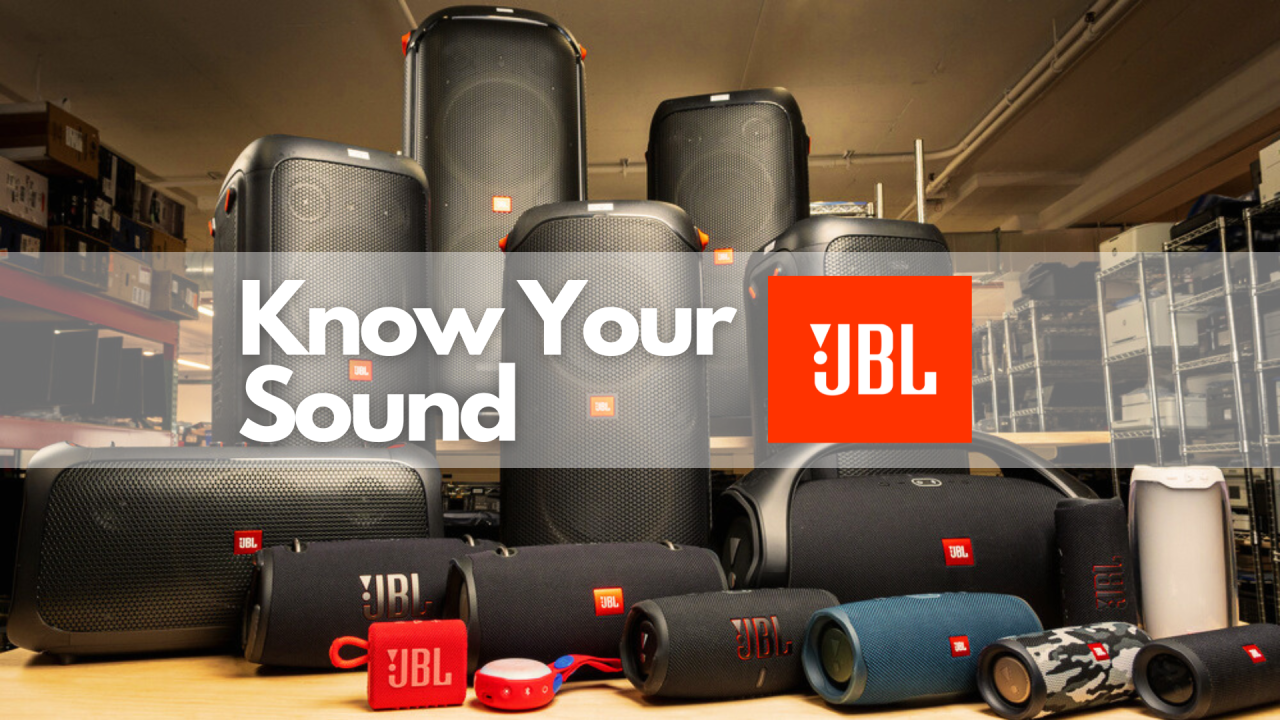 However, JBL is currently best known for its portable speakers. Paradoxically, this is where it has the most opportunity to spread Eclipsa Audio. This is where the NQ8 processor can play an important role. They may even be of the previous generation, but here it is necessary to offer software with other functions than L75ms. These are apps for mobile phone control. All that's needed is to set the direction and leave the door open for independent solutions. The Eclipsa Audio concept fits this perfectly, and the popularity of YouTube and JBL will be driving forces. Samsung does not need to save on the processor, because its development is the most expensive and then it becomes obsolete quickly. It is necessary to find as many uses for it as possible, as quickly as possible.
However, JBL is currently best known for its portable speakers. Paradoxically, this is where it has the most opportunity to spread Eclipsa Audio. This is where the NQ8 processor can play an important role. They may even be of the previous generation, but here it is necessary to offer software with other functions than L75ms. These are apps for mobile phone control. All that's needed is to set the direction and leave the door open for independent solutions. The Eclipsa Audio concept fits this perfectly, and the popularity of YouTube and JBL will be driving forces. Samsung does not need to save on the processor, because its development is the most expensive and then it becomes obsolete quickly. It is necessary to find as many uses for it as possible, as quickly as possible.
drawing by Per Oscar Dahlberg
Benjamin's psychoacoustic lab is
constantly testing and implementing possibilities for optimal music
playback using new technical solutions with the computing potential of
computers and open structures. PC4uMusicis the main project and this blog is just a notebook focused on technical possibilities, not the beauty of words.

PC4uMusic 3-language (se; en; pl) Facebook profile>>>
Project Everest DD66000 - Product Commentaries and User Guide
ReplyDeletehttps://www.audioclassics.com/manual/DD66000_OM.pdf
Samsung Vision AI also delivers exceptional advancements in picture and sound quality, making every on-screen moment captivating. On-device AI picture and sound technologies analyze content and environmental factors in real time, dynamically adjusting visuals and audio for an optimized experience.
ReplyDeletehttps://news.samsung.com/global/samsung-electronics-unveils-samsung-vision-ai-and-new-innovations-at-first-look-2025-delivering-personalized-ai-powered-screens-to-enrich-everyday-life
Samsung Unveils Its 2024 TV Lineup: AI-Enhanced Picture and Sound
Deletehttps://en.homecinesolutions.fr/blog/posts/1661-samsung-unveils-its-2024-tv-lineup-ai-enhanced-picture-and-sound
Mozart Platform™ is Bang & Olufsen’s newest software platform, created to ensure our product longevity goes beyond physical design and craftmanship. A seamless experience, encompassing the luxury touch of Bang & Olufsen, designed to be updated, improved and built on for years to come.
ReplyDeletehttps://www.bang-olufsen.com/en/int/story/next-generation-speakers
LG most likely uses a Samsung processor
ReplyDeleteDolby Atmos is a surround sound technology developed by Dolby Laboratories. It expands on existing surround sound systems by adding height channels as well as free-moving sound objects, interpreted as three-dimensional objects with neither horizontal nor vertical limitations. Following the release of Atmos for the cinema market, a variety of consumer technologies have been released under the Atmos brand. The initial cinema Atmos systems used in-ceiling speakers, then upward-firing speakers (e.g. for soundbars) were introduced as an alternative for consumer products. Atmos is also used on some devices that do not have a height channel, such as headphones, televisions, mobile phones, and tablets.
ReplyDeletehttps://en.wikipedia.org/wiki/Dolby_Atmos
Harman Buys Roon, But Why?
ReplyDeleteby Jacob Green — January 29, 2024
https://www.audioholics.com/news/harman-buys-roon
What is Roon? How the music platform works and what devices are Roon Ready
ReplyDeleteBy Becky Roberts Contributions from Dan Sung last updated 11 September 2024
https://www.whathifi.com/advice/roon-everything-you-need-to-know
One milestone in this expansion phase was a double licensing agreement with Harman International, signed in early 1998. This gave Harman the exclusive right to sublicense NXT’s technology to companies in the USA, as well as a worldwide licence to manufacture and sell products that were based on NXT technology.
ReplyDeletehttps://www.hifinews.com/content/nxt%E2%80%99s-flatpanel-speaker