Bluetooth and DirectSound provide better capabilities in PC4uMusic configurations, and there's more to it

An analog signal from a PC can be converted from digital at 192 kHz/32-bit floating point. It's just difficult to use Windows speaker calibration when the signal is fed analog from a laptop or all-in-one PC. A digital connection seems less appealing, as the specifications show that the precision of digital-to-analog conversion is always lower.


There is no doubt that there is access to room correction, which may be due to the very simple Logitech speaker driver. The entire calibration process is identical to that of the standard system controller.

Only the system functions of the standard Windows driver can be used. This then guarantees that it remains up to date. There are limitations in the driver according to the hardware capabilities and only a frequency of 44.1 kHz is available in the settings.

In AIMP it was possible to set the oversampling to 174.6 kHz. Can be set with DirectSound, but not with Windows Audio Session Application Programming Interface. Works perfectly with CDs and streams at their sampling rates. The higher frequency of 192 also works, but a little less stable.
 The Logitech Z 207 speakers take up little space, and in this class they have a rare design with a full-range electroacoustic driver and a passive radiator for more optimal performance with low tones. Passive radiators are used instead of a reflex port for several reasons. In small-volume enclosures tuned to low frequencies, the length of the required port becomes very large. They are also used to reduce or eliminate the objectionable noises of port turbulence and compressive flow caused by high-velocity airflow in small ports. In addition, ports have pipe resonances that can produce undesirable effects on the frequency response. To a first-order approximation, the passive radiator works identically to a port
 Another interesting observation is the cheap set mentioned in the previous entry Tokyo Electro Acoustic Company had some interesting plans with NXT when digital recordings came along. Playing music with the TEAC set connected to the laptop via analogue was impressive with low tones that were not distorted, but a bit too dominant.

Connecting the docking station to a laptop will result in an analog output with speaker settings, although unfortunately there is no room correction and in AIMP with WASAPI only 48 kHz sampling is available, but 192 oversampling is with DirectSound.


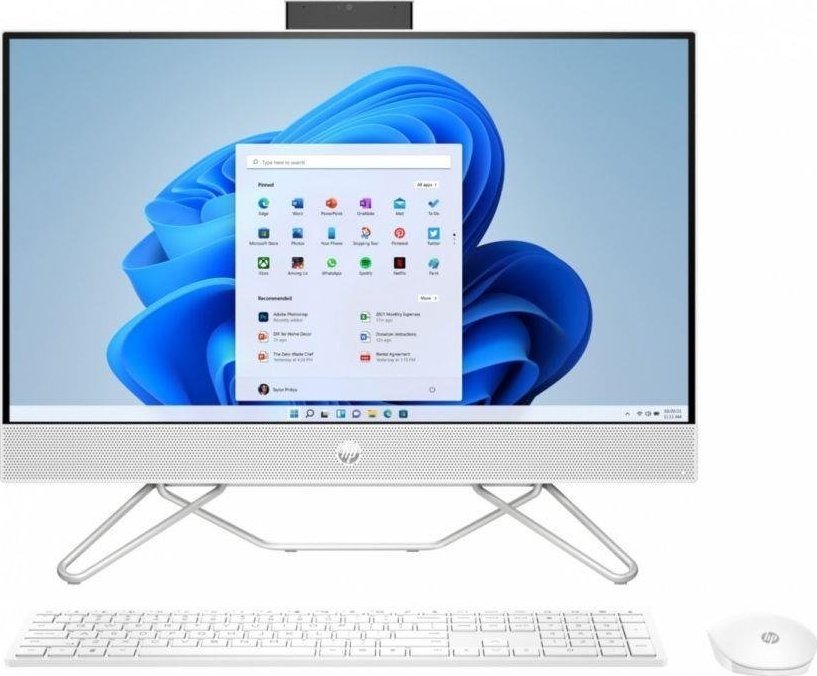 All in one PCs have problems similar to those of laptops, and the built-in sound processor may also not support 192 kHz as standard. However, AIMP with DirectSound allows optimal oversampling also with an analog connection. Connected via Bluetooth, the Z 207 can also be calibrated to the room. It is very possible that the same is true for many other active speakers.
Logitech also has an alternative with the Z 407. The built-in sound processor allows to create a very interesting solution on this basis with the help of software, which may be a driver for Windows. This kit most likely includes a cheap analog filter, and the processor can provide a better digital solution, which only requires appropriate software. Passive satellites do not need filters because they have broadband electroacoustic transducers. Roon Corretcion in Windows should also see that it is 2.1, similar to 5.1.

Such a digital solution could be even more interesting from Tokyo Electro Acoustic Company. Their MC-DX220iDAB digital radio model appeared two decades ago. Its built-in DAC supported a variety of digital signals: from discs and even MP3 compression from radio broadcasts and phones. Back then, it simply needed to be supplemented with additional inputs and continuously updated to support USB, HDMI, and Bluetooth. Practical tests show that with the software you can achieve good sound quality even with cheap processors. Also, more advanced processors are no longer too expensive.

drawing by Per Oscar Dahlberg
Benjamin's psychoacoustic lab is
constantly testing and implementing possibilities for optimal music
playback using new technical solutions with the computing potential of
computers and open structures. PC4uMusicis the main project and this blog is just a notebook focused on technical possibilities, not the beauty of words.

Logitech Z207 2.0 Stereo Computer Speakers review: Improved sound for all your devices
ReplyDeleteAug 27, 2019 by Michael Ansaldo
https://www.pcworld.com/article/397924/logitech-z207-2-0-stereo-computer-speakers-review.html
Tim Gideon
ReplyDeleteWe're see fewer and fewer new computer-focused speaker these days, but they’re out there, often with the added benefit of Bluetooth for connecting your mobile devices. The Logitech Z407 is one such 2.1 system that delivers powerful audio for its $109.99 price.
https://uk.pcmag.com/speakers/130199/logitech-z407