4 center loudspeakers at a good price for a home surround system with a D'Appolito design and PC4uMusic configuration
 STX Advanced Audio Technology is a Polish manufacturer since 1990 year. Produceing loudspeakers, home cinema systems, drivers and public-address systems. For under 80 euros they offer the C200n with favorable characteristic and this set of electro-acoustic transducers manufactured in Poland has a design in line with D'Appolito


This arrangement of transducers reduces phase distortion, as shown in the illustration above. Wikipedia has this to say on the subject: The midwoofer-tweeter-midwoofer loudspeaker configuration (called MTM, for short) was a design arrangement from the late 1960s that suffered from serious lobing issues that prevented its popularity until it was perfected by Joseph D'Appolito as a way of correcting the inherent lobe tilting of a typical mid-tweeter (MT) configuration, at the crossover frequency, unless time-aligned.

Key features for 5" midwoofers in STX C200n :
High linear displacement range
High mechanical displacement range
Ventilated voice coil gap for reduced power compression
Modified Cellulose Cone

The installed tweeter has 1-inch voice coil and a rear chamber with absorbent material. A passive two-way crossover with high-quality components ensures excellent sound reproduction and a linear frequency response.
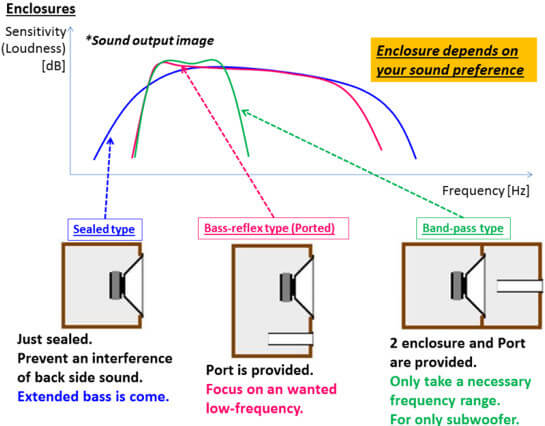
The closed enclosure is made of MDF and laminated board. It provides optimal sound attenuation with dynamic bass reproduction, without the distortion typical of bass reflex, which is perceived as a more powerful sound. STX C200n is offered as a center speaker for a home cinema system, but it also offers other possibilities with PC4uMusic configuration.

Windows has options for playing music from 3 speakers in the front and one in the back. This is a setting for the old Dolby format, but it will work in most homes to provide the right sound level with 4 speakers. The STX C200n's excellent performance makes listening to music a truly enjoyable experience, even though the cost is relatively low. The closed enclosure and passive crossover are not a hindrance with the appropriate power amplifier.
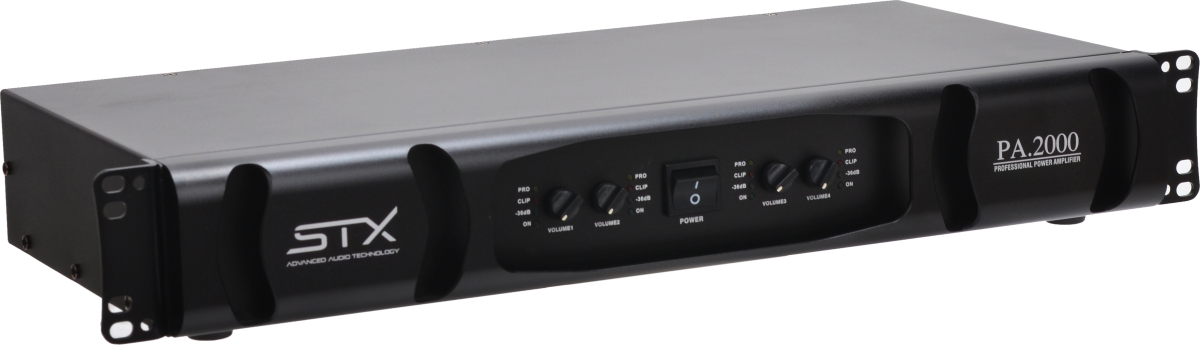
For under 500 euros, STX offers a stage amplifier with impressive power. This is 4x350W to drive the C200n set with an impedance of 8 ohm. This amplifier operates in Class D, which has its limitations, but in practice, these limitations are significantly reduced due to the large power reserve. Its important advantage is that it emits less heat in the apartment, which is especially important when listening to music in the summer. With such a set connected to a PC, the music will sound good even in a very large apartment. The side adaptation with holes for PA mounting can be easily unscrewed at home.


- Integrated bluetooth receiver
- Remote control
- RCA subwoofer output
- RCA line in
- Mini - jack line in
- Optical in

4 speakers with such good characteristics can also be optimally adjusted to a specific room. Windows offers a Room Calibration function for this purpose. There's even a Virtual Surround function for generating sound to four speakers from stereo recordings. In the golden age of hi-fi, a very simple analog solution was offered for pairs of speakers placed to the side, in front of and behind the listener. This was often offered with a very cheap resistor solution in stereo amplifiers. Now, with digital technology, it's much more refined.

There will also be interesting solutions for the older Dolby format, such as those for their latest one. Wikipedia on this topic provides: Dolby Atmos technology allows the storage and distribution of 128 audio tracks with metadata describing sound properties such as position and volume (and their variation over time). The audio mix is rendered specifically for the theater's setup using the loudspeakers available. Each audio track can be assigned to an audio channel, the conventional format for distribution, or to an audio "object". The development of this technology has been limited only by high licensing fees.
In the first days of 2025, a competitive offer appeared with similar capabilities without the limitations of licensing costs. Global giants are behind it. They are members of the Alliance for Open Media. Microsoft is also among them and will not miss the opportunity to support new surround sound solutions in Windows. Investing in a set from STX has a broader perspective and allows you to enjoy music now.
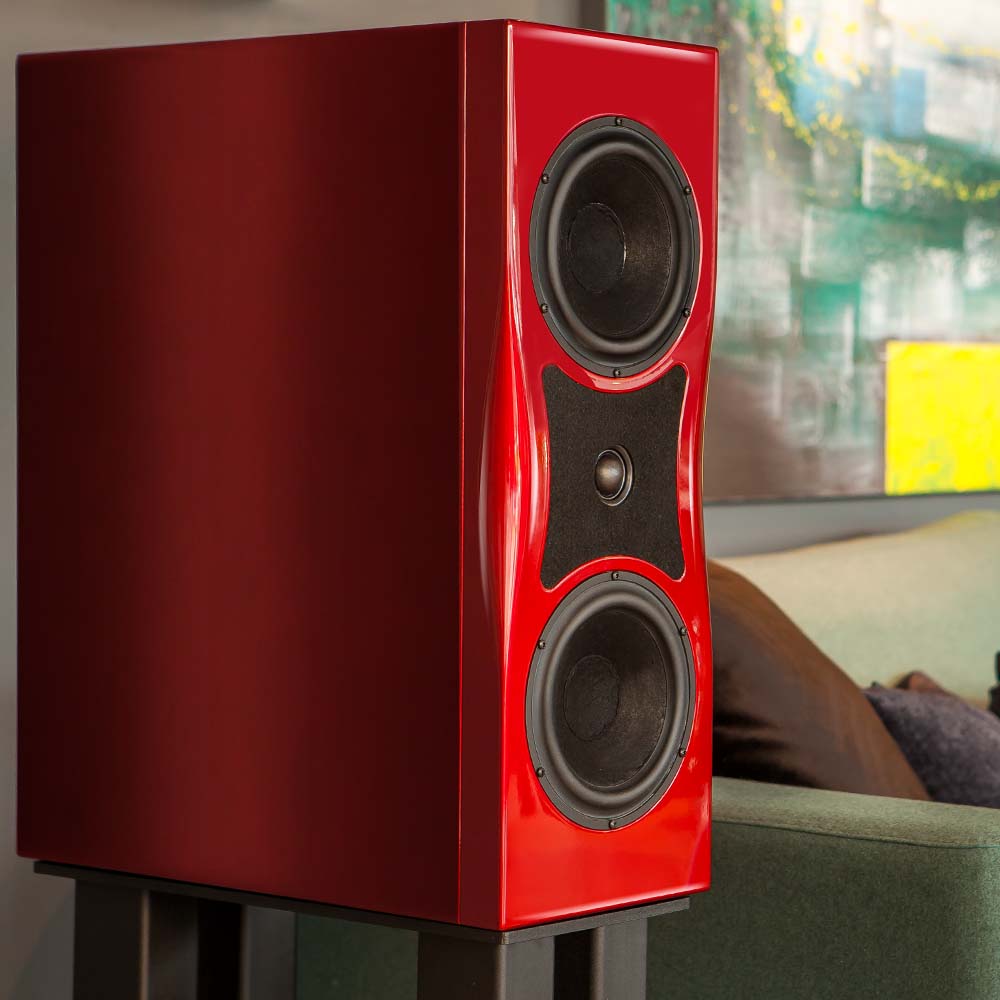
Another Polish offering is significantly more expensive. These are active studio monitors:, about which it is written: A two-way stand-mount, these hefty beasts have three drive units on the front baffle of the sealed enclosure, the soft-dome tweeter in the centre of two 7-inch coarse-textured paper cones. Created in Poland, and utilizing drive units from Scanspeak in a vertical d’Appolito array, the Blipo is a £5,490 package (sans the dedicated two- four- and six-legged stand options) which includes 300W Class A/B amps for the mid/woofer drivers and 80W of power for the tweeter. 380 Watts per side in an active arrangement is capable of generating as much energy as most domestic environments will ever need.


Derived (2–2–4) formats are simple and often passive arrangements that rely on extracting the stereo difference or other out‑of‑phase information from stereo records to synthesize a surround‑sound effect.
ReplyDeletehttps://en.wikipedia.org/wiki/Quadraphonic_sound#Derived_(2%E2%80%932%E2%80%934)_formats
The Hafler circuit is a passive electronics circuit with the aim of getting derived surround sound or ambiophony from regular stereo recordings without using costly electronics.
Deletehttps://en.wikipedia.org/wiki/Hafler_circuit
Dynaquad, or DY, was a matrix decoder 4-channel quadraphonic sound system developed by Dynaco in 1969.[
DeleteThe system originally had four speakers that were arranged in a diamond shape (centre-front, centre-left, centre-rear, centre-right)
https://en.wikipedia.org/wiki/Dynaquad
Closed housing designs have better control over the bass, faster impulse protection and higher bass quality. Since air cannot escape from the housing through ports or tubes, the housing offers solid, undistorted bass reproduction.
ReplyDeleteBass reflex-subwoofer housing have the advantage of higher bass reproduction and deep bass performance by using the sound reflection in the housing. The construction principle of bass reflex boxes enables an increased amount of air for sound delivery compared to closed boxes. This leads to a deeper bass, but also less control over the bass compared to closed subwoofer housings.
https://masori.de/en/blogs/audio-blog-tips-tricks-for-carhifi-heimkino-marine-and-caravan-hifi/bass-reflex-vs-subwoofer-housing-closed-what-is-the-better-one?
When speakers are designed for home use or for high-volume live performance settings (e.g., with bass amplifier speaker cabinets and PA system speakers and subwoofers), manufacturers often consider the advantages of porting (increased bass response, lower bass response, improved efficiency) to outweigh the disadvantages (port noise, resonance problems). The design is popular among consumers and manufacturers (speakers cabinets can be smaller and lighter, for more or less equivalent performance) but the increase in bass output requires close matching of driver, the enclosure, and port. Poorly matched reflex designs can have unfortunate characteristics or drawbacks, sometimes making them unsuitable for settings requiring high accuracy and neutrality of sound, e.g. studio monitor speakers for use by audio engineers in monitoring facilities, recording studios etc.
Deletehttps://en.wikipedia.org/wiki/Bass_reflex
Closed-box (sealed) enclosures
Deletehttps://en.wikipedia.org/wiki/Loudspeaker_enclosure#Closed-box_(sealed)_enclosures